
Letting Time Reshape the Form
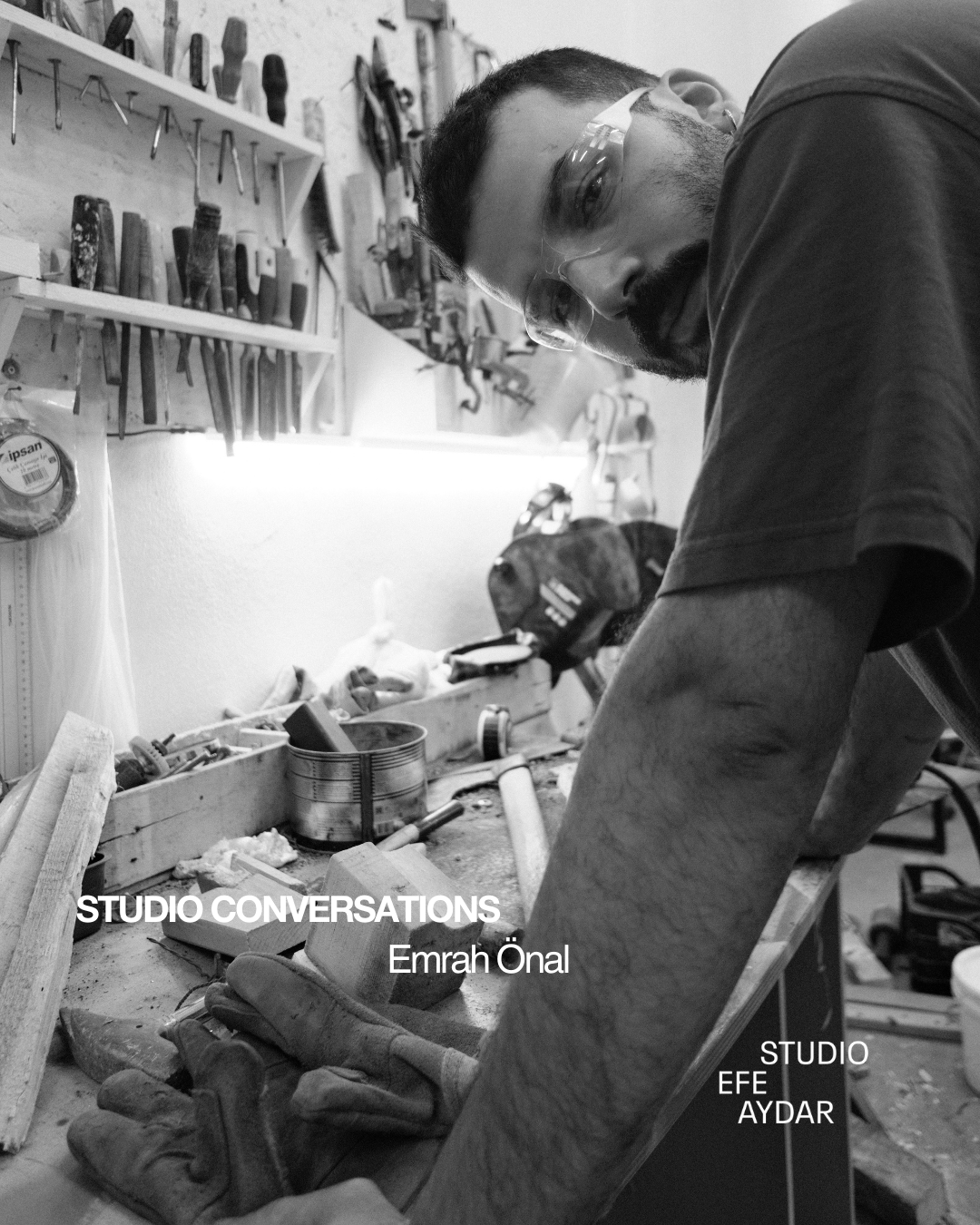
Within Studio Efe Aydar’s curatorial project in Cappadocia, this conversation delves into Emrah Önal’s approach to sculpture as a living form — one that is allowed to weather, crack, collapse, and regenerate meaning over time.
Sculpture as a Living Form
Studio EA: Your practice originates in interior-focused work, yet you moved this piece outdoors — allowing it to weather, shift, even collapse. Was this risk intentional? Does that unpredictability add a new layer of meaning?
Emrah Önal: Absolutely. Though I can’t define that layer precisely, because every viewer forms a different relationship with the work. The sculpture was originally designed for an interior and treated with the Japanese burning technique and oil to withstand conditions, but over time I realized how structurally flexible it actually was.
As my thinking shifted, I became more process-oriented: “What will rain do? How will water or time reshape it?”
The excitement lies in not knowing. We simply don’t know how it will settle or collapse — and that open-endedness creates infinite possibilities.
Studio EA: So you essentially surrendered the work to time.
Emrah Önal: Exactly. It doesn’t lose a form; it gains one.
Impermanence, Collapse, and
the Meaning That Remains
Studio EA: Why would an artist choose to create a piece that might eventually disappear?
Emrah Önal: Because temporariness is part of contemporary life. Even when we aim for permanence, we constantly confront the temporary. That tension brings productive contradictions.
A sculpture collapsing isn’t necessarily the end — if it disappears, it completes its cycle. If it shifts, it creates another layer. Either way, it continues to live conceptually.
Studio EA: So it exists somewhere between permanence and disappearance.
Emrah Önal: Exactly — dependent on time and independent of it. A balance of both.
Studio EA: And how does a collector respond to this?
Emrah Önal: Only a conscious collector embraces it. Today, some collectors value documentation, narrative, or intellectual ownership as much as the physical object itself. That can create a powerful relationship — the collector evolves with the work.
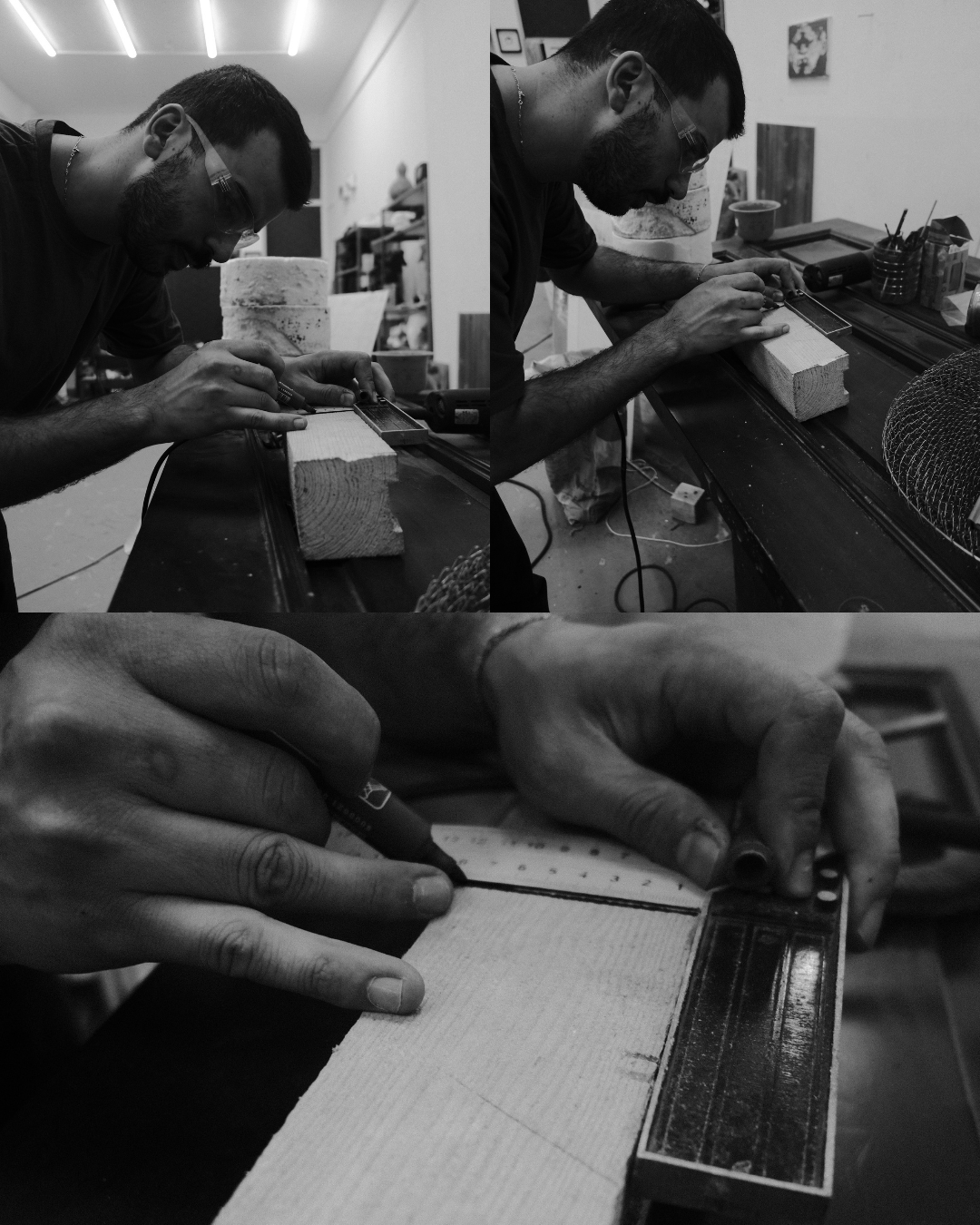
Encountering Cappadocia
Studio EA: When we placed your sculpture in the pool at Avantgarde Refined Cappadocia, the whole team immediately felt the piece belonged there. How did that moment feel for you?
Emrah Önal: I was surprised even before it touched the ground. While still on the crane, it caught the golden tones of the surroundings — something I never imagined.
I always pictured it standing in front of a grey, corporate plaza. But Cappadocia is ancient, layered, unpredictable. And the sculpture didn’t resist it — it settled into that landscape with confidence.
Studio EA: It felt powerful yet slightly distant — in a way that suited the environment.
Emrah Önal: Yes. I use the word “ancient” cautiously, but this sculpture has always carried that feeling. Its name even echoes a Nordic mythology. Normally it creates distance, but here it aligned naturally with the environment. Almost as if two ancient forms acknowledged each other.
Studio EA: And the material? Do you expect change?
Emrah Önal: Nothing dramatic. But morning dew, rain, and sunlight will gradually shift its tonality — darkening, reddening, then lightening again. The surface has its own quiet rhythm.
