
On Stone, Trace, and the Memory of Space
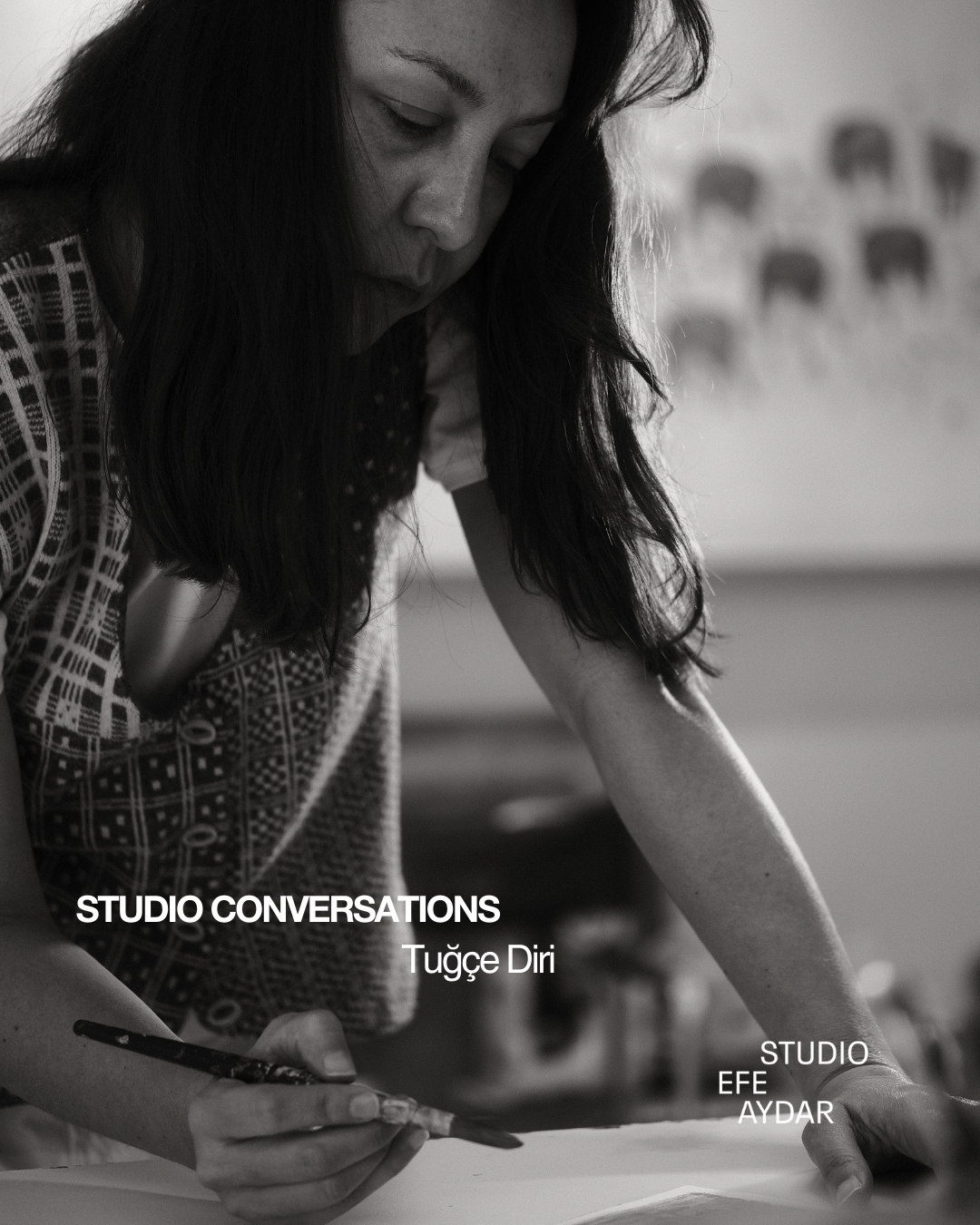
Within Studio Efe Aydar’s Cappadocia project, artist Tuğçe Diri explores stone as an archive, space as a living narrative, and the line as a form that gradually seeks its own depth.
The Encounter: A Path Shaped by Instinct
Studio EA:
Our meeting happened entirely by chance. We were searching for a visual direction without knowing what exactly we were looking for. At Anna Laudel, we came across your work — and the fact that you were physically there that day made the moment even more striking. The piece didn’t visually align with anything we had imagined for the project, yet instinctively, it felt right. We shared the project, the atmosphere, the intention. Even though it wasn’t a direction you typically work in, you created a remarkably cohesive series. How did this process unfold for you? Did this “reverse engineering” challenge you?
Tuğçe Diri:
It was a very enjoyable process. You shared your vision with me, but seeing the site changed everything. We arrived at a moment when the local craftsmen were carving the walls using the traditional külünk technique. I was preparing a show at the time, collecting impressions from stone surfaces — so witnessing that carving process felt like perfect timing. I immediately began taking rubbings and visual notes.
Traces and Space: What Stone Remembers
Studio EA:
You often say you “work with space.” What does that mean to you?
Tuğçe Diri:
I examine the transformation of spaces — their layers, their accumulated traces. Hagia Sophia is the clearest example: every era, every authority has left a mark. It carries both physical and intangible shifts. Stone, for me, is the most honest medium for holding these layers of time.
Studio EA:
How did these traces make their way into your practice for this project?
Tuğçe Diri:
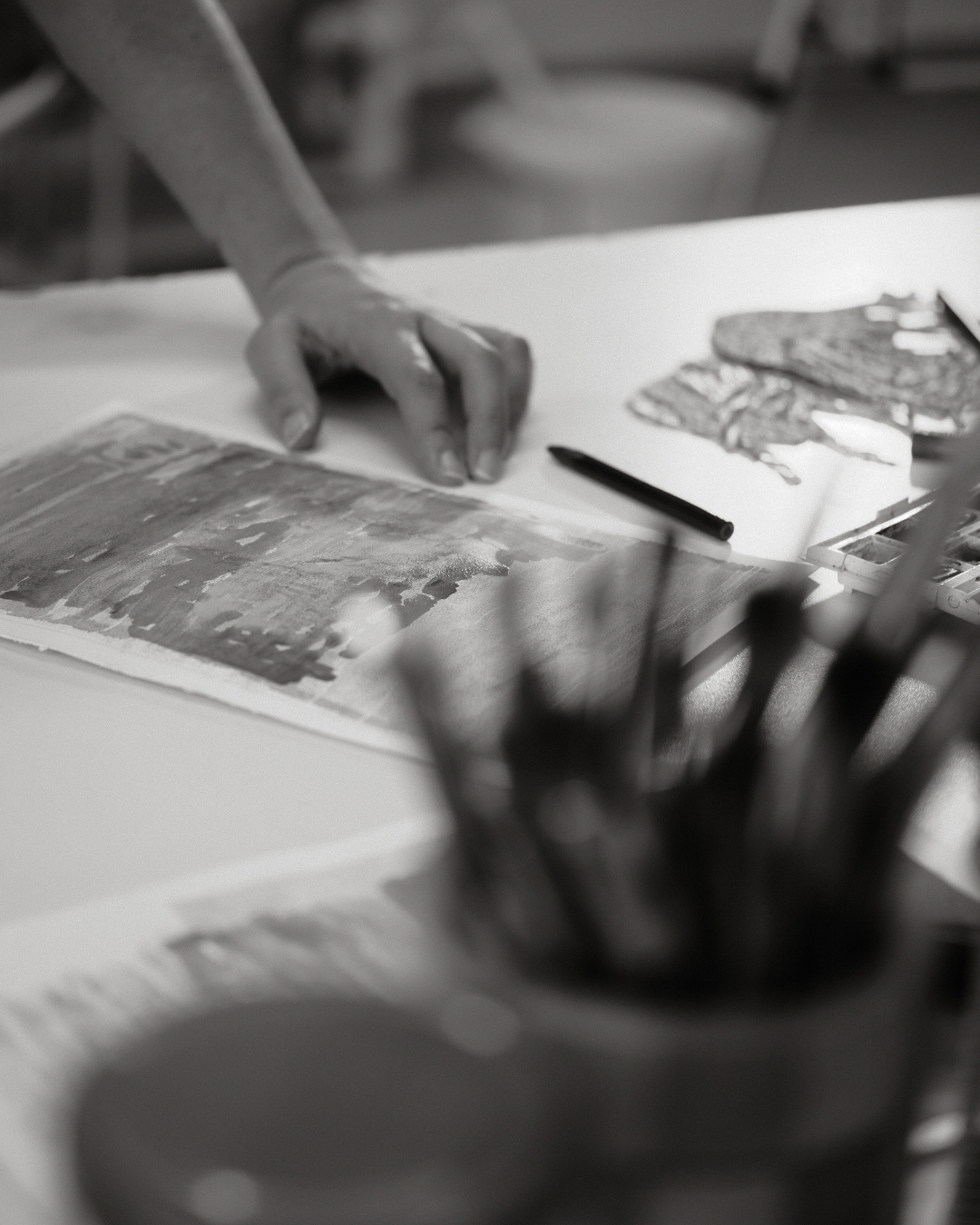
I gathered all my sketches, photographs, and videos from Ürgüp. Your guidance also became part of the material. The process was shaped not only by my own intuition but also by your perspective. That expanded the scope instead of constraining it.
A Permanent Collection &
The Line Seeking a Third Dimension
Studio EA:
In the end, nearly a hundred works were placed throughout the rooms. What did it feel like to see the entire collection installed?
Tuğçe Diri:
Very fulfilling. Producing for a specific spatial context can be demanding, but here the process was incredibly organic. Everyone shared the same intention.
Studio EA:
How does it feel knowing the works are permanently there?
Tuğçe Diri:
It’s a delicate balance. On one hand, it’s deeply gratifying; on the other, constant visibility can be overwhelming. But the works have left me now — they’re living their own timeline. I only step in through occasional feedback, and that’s enough.
Studio EA:
Will the series continue?
Tuğçe Diri:
Definitely. Living in a layered city like Istanbul means this research never ends. Wherever I go, the first thing I look at is the walls, the surfaces, the textures. This series will always accompany me.
Studio EA:
This project also led you into sculptural work. How did it feel to move your line into a three-dimensional form?
Tuğçe Diri:
It was already within me — the desire to push the line beyond the surface. I had experimented with textiles and thread before. Working with metal and aluminum in this project allowed the line to form itself spatially. Material diversity has always been a natural part of my process. The line slowly opens itself toward space.
Studio EA:
There has always been an architectural sensibility in your work, and this evolution feels very aligned.
Tuğçe Diri:
It probably is. The line tends to lean toward space, and that instinct naturally pushes me toward new materials and forms.
Studio EA:
We’ll be following that evolution closely.
