
Reframing the Image
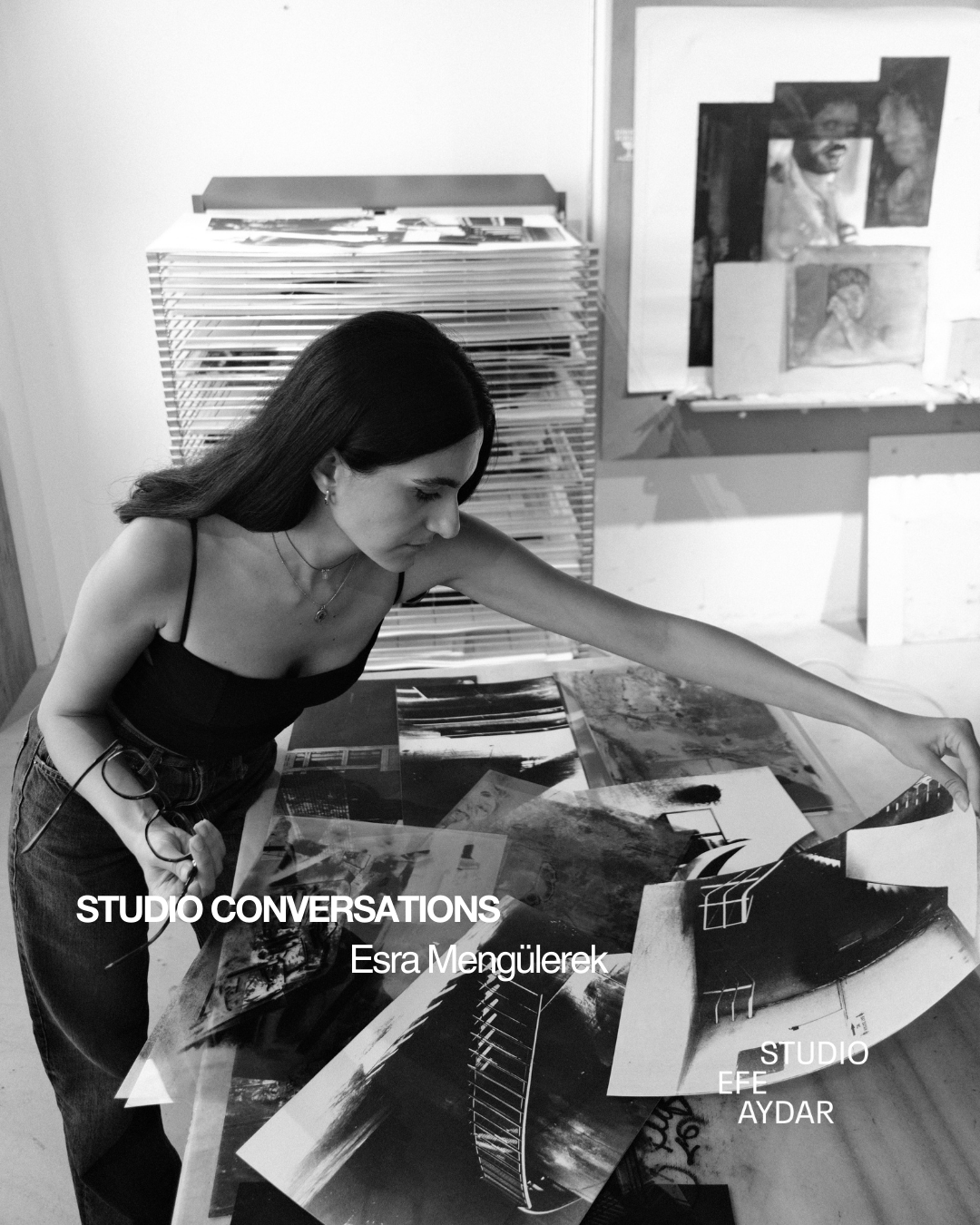
Part of Studio Efe Aydar’s ongoing dialogue between architecture and the visual arts, this conversation explores how a photograph shifts when reinterpreted, repositioned, and fragmented within the architectural project in Cappadocia.
Studio EA: In this project, we did something unprecedented: we took your work and physically divided it—into two, even three parts. Throughout the project there was a conceptual narrative built around “fragmenting and reassembling,” and we sensed the same potential in your photographs. How did it feel to have someone else intervene in your work?
Esra Mengülerek: Naturally, when I first heard it, there was hesitation. It’s not easy for an artist to accept such an intervention. But when I saw the result, it didn’t feel like destruction; it felt like a logical division of a moment I had already frozen. The placement, the way the parts communicated within the space—seeing it all together made sense.
Studio EA: Do you see it as a completely new work, or a different version of the same piece?
Esra Mengülerek: A different version of the same piece. The real transformation depends on where it’s placed. A space, a wall, an object next to it—any of these can reshape its meaning. The context becomes part of the work.
Studio EA: And when you saw your piece alongside the others?
Esra Mengülerek: The fragmentation created a surprising sense of unity. My work felt more complete in relation to the others and the space.
Studio EA: That was exactly the intention. The interior was minimal; we wanted the works to speak on their own. They could have stood powerfully without intervention, but this opened a new narrative.
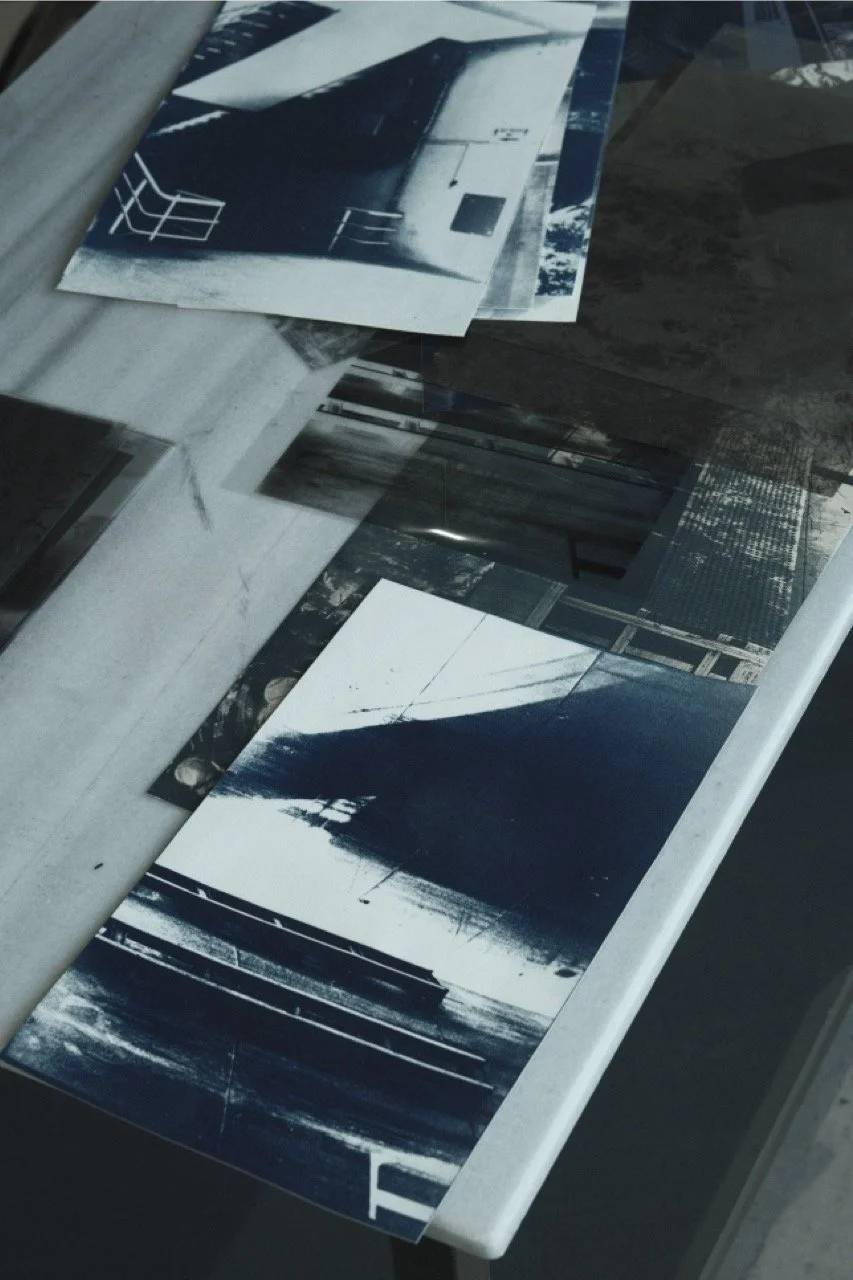
“Settled Uncertainty” and “Transfiguration
Studio EA: Your series titles—Settled Uncertainty, Transfiguration—where do they come from? Do they emerge during the process or afterward?
Esra Mengülerek: Sometimes the title finds itself during the process. As the work takes shape, I begin building the conceptual space the name will sit in. Other times, the process is intuitive and the work discovers its own name. Settled Uncertainty is a phrase I had been carrying for a long time—about changing spaces, lost functions, disappearing places. A place I touched a year ago no longer exists today; the rapid transformation made me realize how our memory shifts with spaces.
Studio EA: When you say the space transforms, what do you mean?
Esra Mengülerek: Quite literally—its function shifts, it changes, or vanishes. “Settled” and “uncertainty” coexist constantly. Transfiguration focuses on the human figure—our internal and external dialogues, the visible transformation of posture, voice, and presence.
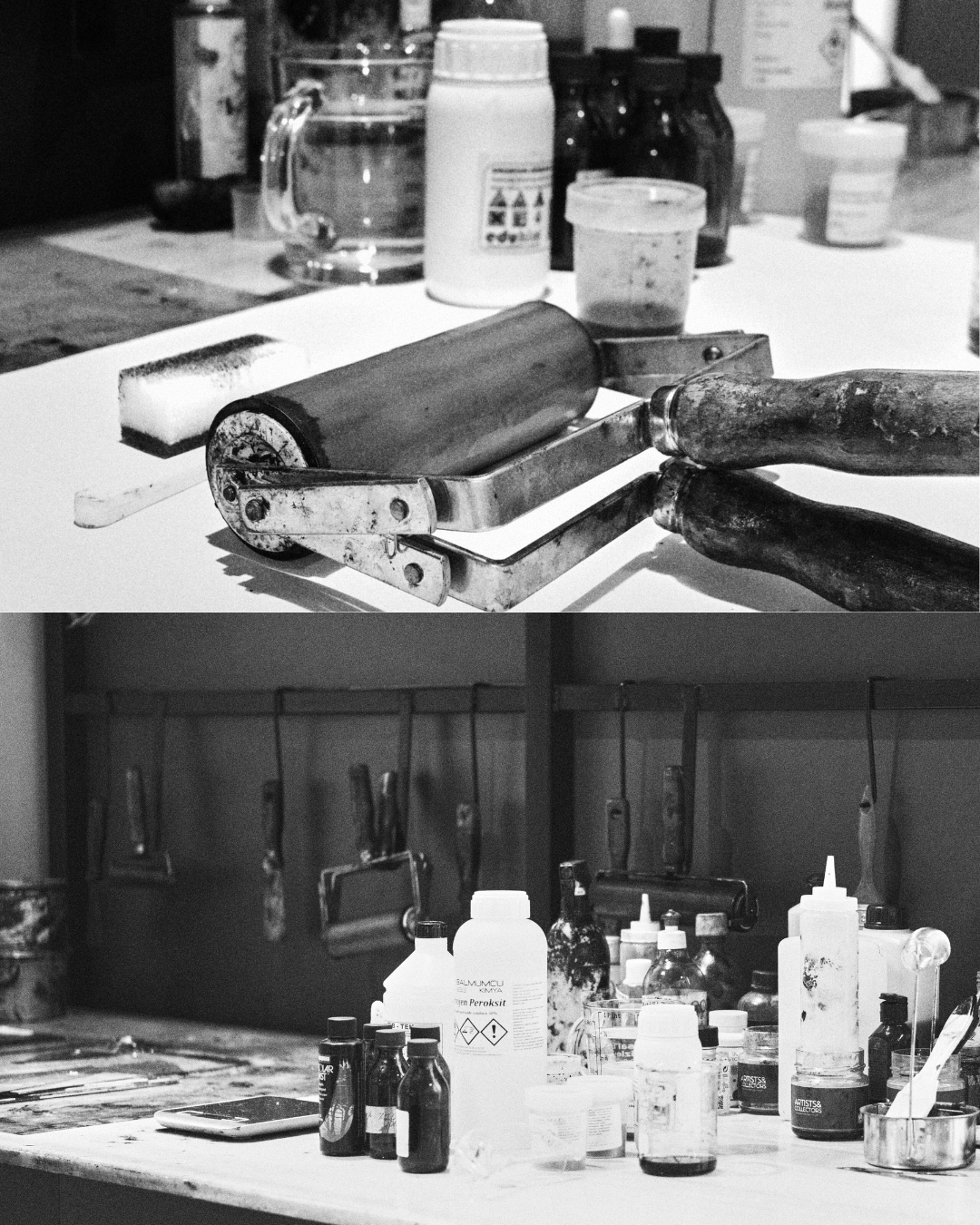
Process: Instinct, Research, Street
Studio EA: How do you begin a new project—and why begin?
Esra Mengülerek: Movement. The studio is one space, but the street is another. I can't produce by staying indoors all the time. Encounters, concerns, daily life, personal or social issues—they all trigger the process. It’s never the same. Sometimes research-driven, sometimes intuitive. Settled Uncertainty started with researching old spaces in Istanbul whose functions had shifted. There’s no fixed timeline; sometimes it takes a year.
Studio EA: So it’s both instinctive and planned.
Esra Mengülerek: Exactly—sometimes coincidence, sometimes intention.
Cappadocia Collaboration
Studio EA: Had you ever created a work specifically for an interior before?
Esra Mengülerek: No.
Studio EA: Then how was the Cappadocia experience?
Esra Mengülerek: Initially I had doubts because of the fragmentation, but seeing it within the whole made me truly satisfied. The relationship between the work and the interior was very strong.
Studio EA: Your work responded so naturally to the space that it felt as if it had been created for this project years ago. Your photographs became part of the architecture rather than sitting on top of it.
Esra Mengülerek: It’s definitely something I’ll keep thinking about
